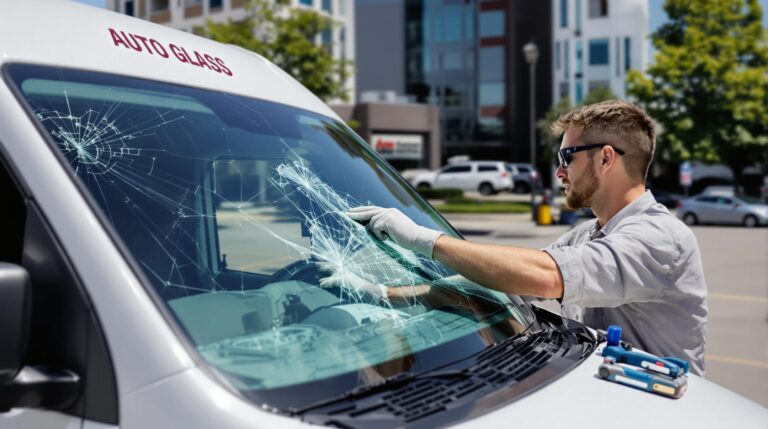
A windshield crack that seems manageable on Monday can stretch halfway across your glass by Friday. It’s one of the most frustrating aspects of auto glass damage — the problem rarely stays the same size, and it almost never gets better on its own. Understanding what causes windshield cracks to spread is the first step toward protecting your vehicle, your wallet, and your safety before a repairable crack becomes a full replacement.
At Low Price Auto Glass in Hammond, Indiana, we work with drivers throughout the area who come in with damage that started small and grew — often faster than they expected. Northwest Indiana’s climate is particularly unforgiving on windshield damage. This guide breaks down every major factor that drives crack propagation and explains what you can do to slow the process until you can get it professionally addressed.
How a Windshield Crack Begins — and Why It Doesn’t Stay Put
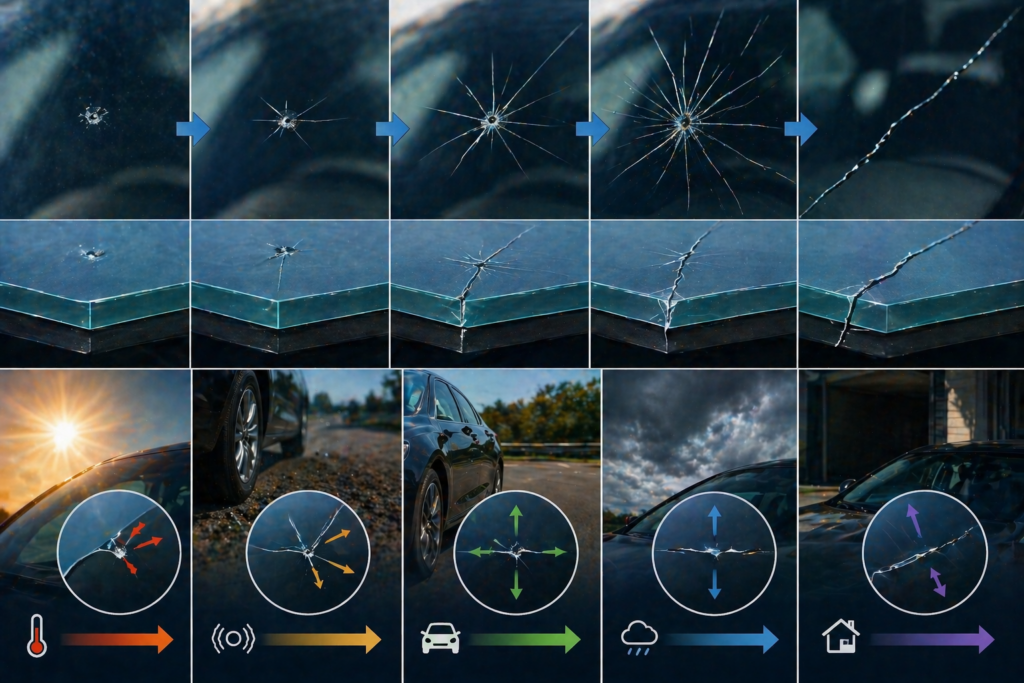
Modern windshields are constructed from laminated safety glass — two layers of tempered glass bonded together with a clear plastic interlayer called polyvinyl butyral (PVB). When an impact occurs, the outer glass layer fractures at the point of contact, creating a chip, bull’s-eye, or star-burst pattern with microscopic stress fractures radiating outward. The PVB layer beneath typically holds the glass together and prevents it from shattering, but those surface fractures are now a structural weakness in the glass.
From the moment a crack forms, it is subject to a range of forces — thermal, mechanical, and environmental — that all push in the same direction: outward. Left unaddressed, these forces work continuously and silently, often producing dramatic results with no warning. The crack is not waiting for a convenient time to grow. The conditions around it are constantly acting on it.
Temperature Change: The Single Biggest Driver of Crack Spreading
Of all the factors that cause windshield cracks to spread, temperature change is the most powerful and the most consistent. Glass expands when it heats up and contracts when it cools down. Under normal circumstances, a healthy windshield manages this thermal movement without issue. A cracked windshield cannot.
At the point of a crack, the glass is already structurally compromised. When the surrounding glass expands from heat, the stress concentrates at the crack tip — the leading edge of the fracture — and drives it further into the undamaged glass. When temperatures drop and the glass contracts, the same thing happens from the opposite direction. Every heating and cooling cycle advances the crack, even by a small amount, and those increments add up quickly.
In Hammond and throughout Northwest Indiana, this is a year-round concern. Summer heat — with temperatures regularly climbing into the upper 80s and 90s, and windshield surface temperatures reaching far higher in direct sun — creates intense thermal stress on cracked glass. Indiana winters deliver the opposite problem: sharp overnight temperature drops, hard freezes, and the added effect of frozen moisture inside the crack itself. When water enters a crack and freezes, it expands with enough force to physically widen the fracture from the inside. The morning thaw then allows the crack to spread further before refreezing that night. This freeze-thaw cycle is one of the most aggressive crack-spreading mechanisms a windshield can face, and it repeats day after day throughout the winter months.
Using Your Defroster: When Comfort Creates a Problem
On a cold Indiana morning, the instinct is to blast the defroster and clear the windshield as fast as possible. For a cracked windshield, this is one of the worst things you can do. A high-heat defroster directed at cold glass creates an extreme and sudden temperature differential — the inner surface of the glass heats rapidly while the outer surface remains cold. That thermal gradient puts enormous stress on the glass right where it is already weakest, and cracks respond by spreading, sometimes visibly and immediately.
The same principle applies in reverse on a hot summer day when cold air conditioning vents are aimed at the windshield. Rapid cooling of hot glass creates the same kind of thermal shock. If your windshield has any existing damage, temperature moderation — rather than rapid temperature change — is always the safer approach until the crack is repaired.
Road Vibration and Driving Conditions
Every road surface transmits vibration through your vehicle’s frame and into the windshield. On smooth pavement at low speeds, this is negligible. On rough roads, railroad crossings, construction zones, or at sustained highway speeds, the cumulative mechanical stress on a cracked windshield is significant.
Vibration acts on a crack by repeatedly flexing the glass at its weakest point — the crack tip. Over the course of a highway commute, hundreds of small flexion events can advance a crack further than the driver realizes. This is why a crack that seemed stable after a weekend of local driving may appear noticeably longer after a single highway trip. The roads in and around Hammond — including sections of the Borman Expressway and other frequently traveled corridors — provide ample vibration to accelerate this process.
Moisture and Contamination Inside the Crack
A windshield crack is an open void in the glass surface, and it will fill with whatever it is exposed to: rainwater, road spray, cleaning products, and airborne debris. Moisture inside a crack does two things that accelerate spreading. First, as described above, it freezes in cold weather and physically expands the fracture. Second, it contaminates the interior of the crack in a way that makes professional repair increasingly difficult over time.
Windshield crack repair works by injecting a clear resin into the void, where it bonds to the surrounding glass and restores structural integrity. That process requires a clean, dry void. Once moisture, dirt, or other debris has worked its way into the crack, the resin cannot bond properly, and the repair will not hold — which often means the window for a lower-cost repair has closed and full replacement becomes necessary. This is why protecting the crack from moisture contamination is one of the most important things you can do while waiting for a professional repair appointment.
Structural Stress Points: Edge Cracks and Line-of-Sight Damage
Not all cracks are equally dangerous or equally likely to spread rapidly. Two types warrant immediate attention above all others.
Edge cracks — those that start at or near the border of the windshield — are under constant structural stress because the windshield frame exerts compression on the glass perimeter. A crack that originates at the edge has no undamaged glass between it and the frame to absorb that stress, and it almost always spreads quickly and extensively. Edge cracks also compromise the windshield’s seal against the frame, which can lead to water intrusion into the vehicle body over time.
Line-of-sight cracks — those located directly in the driver’s field of vision — are a safety and legal concern in addition to a structural one. Indiana law prohibits driving with an obstructed field of view, and a crack in the driver’s direct sightline can constitute a vehicle equipment violation. From a safety standpoint, even a repaired crack in this location may leave optical distortion that affects the driver’s ability to see the road clearly.
Practical Steps to Slow a Crack Before Your Appointment
If you cannot get to a shop immediately, these measures can meaningfully slow crack propagation until you can:
- Cover with clear packing tape. A strip of transparent tape over the crack seals out moisture, road spray, and debris — the primary contamination sources that close the repair window. Use tape that won’t leave residue on the glass.
- Park in a garage or shaded area. Reducing direct sun exposure limits heat-driven thermal expansion and helps moderate the temperature swings that drive spreading.
- Use your defroster gradually. Rather than blasting heat at maximum, warm the cabin slowly and allow the windshield to reach temperature gradually. Avoid directing vent airflow directly at the glass.
- Avoid automatic car washes. High-pressure water jets and the temperature changes involved in a car wash can advance a crack significantly in a single pass.
- Drive smoothly. Where possible, take routes that avoid the roughest road surfaces, and slow down over railroad crossings, speed bumps, and pothole-heavy stretches.
Frequently Asked Questions About Windshield Crack Spreading
How quickly can a windshield crack spread?
In harsh conditions — direct sun, hard freezes, or rough highway driving — a crack can spread visibly within hours. In Hammond’s climate, where winter freeze-thaw cycles and summer heat both apply significant thermal stress, acting within 24 hours of noticing any crack gives you the best chance of keeping the repair option available.
Can I stop a windshield crack from spreading on my own?
You can slow it with clear tape over the crack, shade parking, gradual defroster use, and avoiding car washes and rough roads. These are temporary measures — professional repair or replacement is the only permanent solution.
Does a windshield crack always need to be replaced, or can it be repaired?
Cracks under three inches, away from the driver’s sightline and windshield edge, and free of contamination can often be repaired with resin injection. Longer, edge, or contaminated cracks typically require full replacement. Low Price Auto Glass will assess your damage for free and give you a straightforward recommendation.
Why do windshield cracks spread faster in cold weather?
Moisture inside the crack freezes and physically expands the fracture. The repeated freeze-thaw cycle through Indiana winters is one of the most aggressive crack-spreading forces a windshield faces, and it can advance damage significantly overnight.
Is it legal to drive with a cracked windshield in Indiana?
Indiana law prohibits driving with an obstructed field of view. A crack in the driver’s direct sightline can result in a vehicle equipment violation, and a structurally weakened windshield reduces crash protection for everyone in the vehicle.
How much does it cost to repair a windshield crack at Low Price Auto Glass in Hammond?
Crack and chip repairs are among the most affordable auto glass services we offer, and our pricing is consistently among the best in Northwest Indiana. In many cases our total cost — for repair or full replacement — comes in below a standard insurance deductible. Call for a free estimate before making any decisions.
Don’t Let a Small Crack Make a Big Decision for You
Windshield cracks don’t wait, and they rarely stay small for long — especially in Northwest Indiana’s demanding climate. The combination of hard winters, hot summers, busy highways, and rough road surfaces makes Hammond one of the more challenging environments for damaged auto glass. The sooner a crack is evaluated and addressed, the more options you have and the lower your cost is likely to be.
Low Price Auto Glass has been a trusted resource for Hammond-area drivers for years. We carry one of the largest in-house auto glass inventories in the region, offer same-day service in most cases, work with all major insurance carriers, and price our services to be genuinely affordable. Call us today for a free estimate — we’ll tell you exactly what your crack needs and get your windshield back to full strength as quickly as possible.