Wastewater equipment doesn’t fail suddenly — it fails predictably, through wear that accumulates over time and gets caught too late. Establishing the right inspection schedule is what separates a well-run system from one that produces emergency callouts, regulatory violations, and costly unplanned replacements. Understanding how often wastewater equipment should be inspected depends on the type of equipment involved, the demands placed on the system, and the regulatory requirements governing your installation. At Wastewater Supply, we work with contractors, municipalities, and property managers across the country, and we’ve put together this guide to give you practical, component-specific inspection intervals grounded in EPA guidelines and industry best practices.
Inspection Frequency Isn’t One-Size-Fits-All — But the Consequences of Getting It Wrong Are
A single overlooked inspection on a wastewater lift station can lead to a sewage backup, an environmental discharge, or a complete pump failure — all of which carry costs that dwarf the time and expense of routine maintenance. Nearly 40% of unplanned lift station outages can be traced directly to preventable equipment failures. The math is straightforward: scheduled inspections cost a fraction of reactive repairs, and they protect against the regulatory and reputational consequences of system failures that contaminate the environment or interrupt service.
The right inspection frequency depends primarily on three factors:
- Equipment type — Pumps, control panels, float switches, valves, and structural components each have different wear rates and failure modes that dictate different inspection intervals.
- System load and duty cycle — Equipment running continuously under high load in a municipal or commercial application needs more frequent attention than equipment in a low-demand residential or intermittent-use application.
- Environmental conditions — Systems handling high grease loads, abrasive solids, corrosive influent, or operating in harsh climates degrade faster and require tighter inspection intervals than systems in more controlled conditions.
With those factors in mind, here is a component-by-component breakdown of recommended inspection intervals.
Daily and Weekly Inspections: Catching Problems Before They Escalate
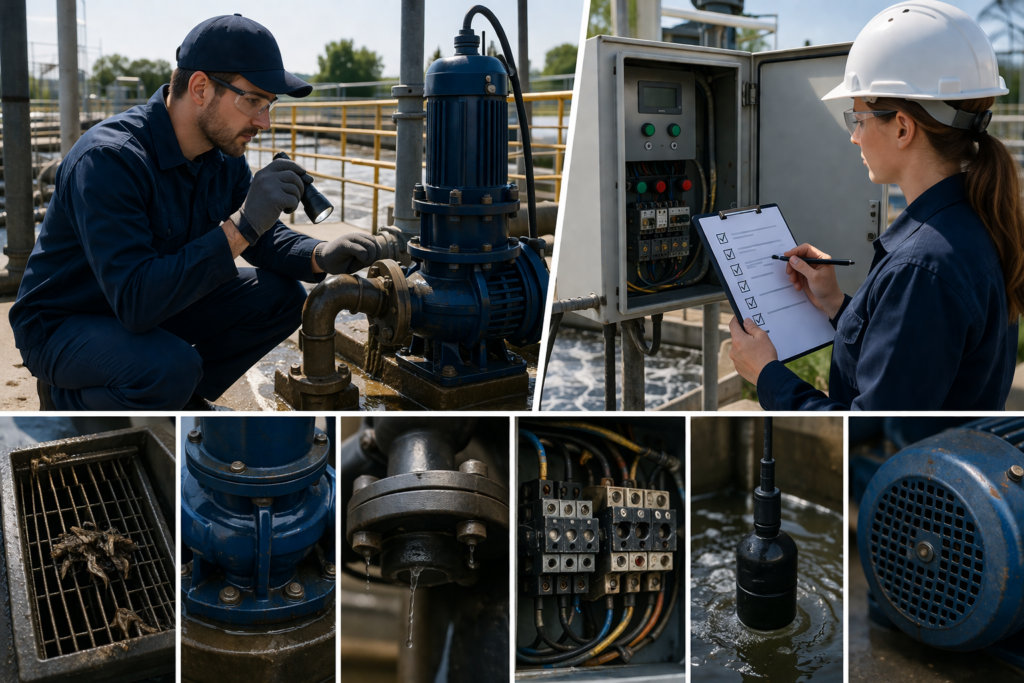
For active wastewater systems — particularly lift stations, pump stations, and municipal treatment facilities — certain checks should happen at every operator visit, which for most systems means daily or at minimum weekly.
The EPA recommends that pump stations be inspected at least once per week to identify potential problems early. Industry guidelines from the Great Lakes – Upper Mississippi River Board (GLUMRB) “Ten State Standards” align with this minimum. For systems under higher demand — high-flow commercial installations, systems with a history of debris accumulation, or facilities with older equipment — daily checks are advisable.
At each weekly inspection, operators should verify:
- Pump run times and cycle counts — Abnormal increases in run time or cycle frequency can indicate pump wear, inflow changes, or control system issues. Tracking these numbers over time creates a baseline that makes anomalies immediately visible.
- Wet well level — Confirm that the wet well is cycling normally and that there is no unusual accumulation of grease, rags, or debris at the surface.
- Alarm panel status — Check for any active or recently triggered alarms and investigate the cause of any that have fired since the last visit.
- Unusual sounds or odors — Grinding, rattling, or humming from pumps can indicate impeller damage, bearing wear, or a clog developing. Unusually strong odors beyond normal operational levels can signal ventilation issues or organic buildup.
- Area around the station — Look for evidence of seepage, unusual wet spots, sinkholes near force main routes, or other signs of subsurface leakage.
- Backup power system status — Verify that generator fuel levels are adequate and that the automatic transfer switch is functioning correctly.
Monthly Inspections: Mechanical and Electrical System Verification
Beyond the quick weekly walk-through, a more structured monthly inspection moves into mechanical and electrical components that require hands-on evaluation. Monthly inspections are where preventive maintenance programs produce the most measurable reduction in emergency callouts.
Monthly inspection tasks should include:
- Float switch inspection — Check float switches for debris accumulation, corrosion, and correct positioning. A float switch tangled in debris or stuck in the wrong position is one of the most common causes of pump overruns and wet well overflows.
- Control panel inspection — Inspect wiring for signs of wear, corrosion, or damage. Verify that circuit breakers, contactors, and indicators are functioning correctly. Check that thermostat settings and ventilation in electrical enclosures are appropriate for the season.
- Valve function check — Operate check valves and isolation valves manually to confirm they move freely and seal correctly. Valves that aren’t exercised regularly can seize, and a valve that fails to close during a pump shutdown can allow backflow that damages equipment and compromises system performance.
- Backup generator load test — Run the generator under load monthly to confirm it will start and sustain operation during a power outage. A generator that hasn’t been tested under load often fails precisely when it’s most needed.
- Level sensor calibration check — Verify that level sensors are reading accurately relative to actual wet well levels. Sensor drift that goes uncorrected leads to pumps cycling at the wrong times, reducing efficiency and increasing wear.
Quarterly Inspections: Pumps, Wet Well Cleaning, and Electrical Testing
The EPA recommends that submersible pumps be inspected at least four times per year — quarterly — as a minimum for most wastewater applications. This recommendation reflects the abrasive and corrosive nature of the wastewater environment, which wears down pump impellers, wear rings, seals, and bearings at a rate that makes annual-only inspection insufficient.
Quarterly inspection tasks for pumps and the wet well include:
- Pump performance testing — Measure amperage draw under load and compare against the pump’s nameplate rating and your established baseline. Increasing amperage often indicates wear or partial clogging. Decreasing flow at the same amperage suggests impeller wear or internal recirculation.
- Wet well cleaning — Pump the wet well down to working levels and remove accumulated grease, rags, sediment, and debris. On systems with high grease loads — food service, commercial, or industrial influent — quarterly cleaning may not be sufficient and monthly cleaning should be considered.
- Seal and bearing inspection — For pumps with oil-filled seal chambers, draw a small oil sample and check for milky discoloration, which indicates water intrusion and impending seal failure. Address seal issues before they allow moisture to reach motor windings.
- Level sensor calibration — Perform a full calibration check quarterly to correct any drift that has accumulated since the last adjustment.
- Electrical system testing — The EPA recommends electrical equipment inspection at minimum every six months, but quarterly testing of motor insulation resistance (megohmmeter testing) and three-phase amperage balance is advisable for systems running continuously or in harsh environments.
Semi-Annual and Annual Inspections: Structural, Mechanical, and Long-Term Asset Assessment
Semi-annual and annual inspections are where you assess the broader health of the system — not just whether it’s running today, but whether it will still be running reliably in two, five, and ten years.
Semi-Annual Inspection Tasks
- Full electrical system testing — Insulation resistance tests on all motors, verification of three-phase voltage balance, inspection of all wire terminations and connections for heat damage or corrosion.
- Valve disassembly and internal inspection — Check valve internals for wear that prevents positive closure. A check valve that doesn’t fully close allows backflow during pump shutdown, which hammers the pump and force main with each cycle.
- Wet well structural inspection — Inspect interior walls, benches, and covers for signs of corrosion, cracking, or structural deterioration. In concrete wet wells, hydrogen sulfide corrosion is a primary cause of structural degradation that worsens rapidly once it begins.
- Force main inspection — Walk force main routes for signs of surface wet spots, vegetation changes, or ground movement that could indicate subsurface leakage.
Annual Inspection Tasks
- Full pump removal and inspection — Remove submersible pumps from service, disassemble, and inspect impeller, volute, shaft, bearings, mechanical seals, and wear rings. Replace worn components before failure rather than after. Schedule this during low-demand periods where possible.
- SCADA and telemetry system audit — Verify that all sensors, alarms, and remote monitoring functions are reading accurately and that alarm notification contacts are current.
- Coating and corrosion assessment — Inspect protective coatings on interior metal components. Recoat areas showing surface corrosion before they progress to structural damage.
- Asset lifecycle review — Compare current equipment performance against original specifications. Pumps, control panels, and lift station components have defined service lives. Planning replacements before failures occur — rather than after — is the most cost-effective approach to capital maintenance.
- Regulatory compliance review — Confirm that the system is meeting all applicable permit conditions, effluent limits, and reporting requirements. Review any notice of violations or inspection findings from the previous year and verify corrective actions are complete.
Inspection Interval Summary by Component
| Component | Minimum Inspection Interval | Notes |
|---|---|---|
| Pump run time and cycle counts | Weekly | Daily for high-load or high-risk systems |
| Wet well level and debris | Weekly | Visual check at each site visit |
| Alarm panel status | Weekly | Or via SCADA remote monitoring continuously |
| Float switches | Monthly | Check for debris, corrosion, and positioning |
| Control panel and wiring | Monthly | Visual inspection; full testing semi-annually |
| Backup generator load test | Monthly | Run under load, not just idle |
| Submersible pump performance | Quarterly (EPA minimum) | Amperage and flow rate comparison to baseline |
| Wet well cleaning | Quarterly | Monthly for high grease-load systems |
| Level sensor calibration | Quarterly | More often if drift is observed |
| Valve internal inspection | Semi-annually | Exercise valves monthly; disassemble semi-annually |
| Full electrical system testing | Semi-annually | Megohmmeter testing, amperage balance |
| Full pump removal and service | Annually | Schedule during low-demand periods |
| Structural wet well inspection | Annually | More frequently if corrosion is active |
Having reliable equipment is the foundation of any effective inspection and maintenance program. Wastewater Supply stocks a full range of submersible pumps, grinder pumps, effluent pumps, control panels, float switches, fiberglass lift stations, and system accessories from trusted manufacturers including Zoeller, Franklin Electric, Liberty Pumps, and Goulds Water Technology. Whether you’re replacing worn components identified during an inspection or outfitting a new installation, our team is here to help you specify the right equipment for your system. Contact us at (317) 674-3812 or reach out at [email protected].
Frequently Asked Questions About Wastewater Equipment Inspection
How often should a wastewater lift station be inspected?
At minimum, lift stations should receive a full operational inspection once per week, per EPA and industry guidelines. High-demand or high-risk systems — those with a history of failures, high grease loading, or critical service — should be visited daily. Monthly mechanical inspections, quarterly pump and wet well maintenance, and annual comprehensive servicing round out a complete preventive maintenance program for lift stations.
What happens if wastewater equipment isn’t inspected regularly?
Deferred inspection and maintenance leads predictably to equipment failures, sewage backups, environmental discharges, and regulatory violations. Pump failures from worn impellers, seized valves, failed float switches, and degraded electrical components are all preventable with regular inspection. Beyond equipment costs, a single sewage overflow event can result in permit violations, fines, environmental cleanup liability, and public health consequences that far exceed the cost of any maintenance program.
Can SCADA or remote monitoring replace physical inspections?
Remote monitoring systems — including SCADA, telemetry, and cloud-based platforms — significantly enhance inspection programs by providing continuous performance data, real-time alarms, and trend analysis between site visits. They reduce the risk of problems going undetected between inspections and allow operators to prioritize which sites need attention. However, they don’t replace physical inspections. Debris accumulation, structural deterioration, coating condition, mechanical wear, and confined space conditions all require on-site assessment that remote systems cannot provide.
Are there regulatory requirements for wastewater equipment inspection frequency?
Yes — most states have permit conditions and operational standards that specify minimum inspection frequencies for permitted wastewater facilities. The EPA’s guidelines and the GLUMRB “Ten State Standards” provide federal and regional frameworks. State environmental agencies typically enforce these through NPDES permits, general permits for small systems, and operating licenses. Local municipalities may impose additional requirements on systems within their service territories. Always verify the specific requirements applicable to your permit and jurisdiction, as these vary by state and system type.
How do I know if my inspection schedule is too infrequent for my system?
Warning signs that your current inspection schedule isn’t catching problems early enough include: recurring reactive service calls for the same equipment, emergency pump replacements that could have been avoided, alarm events that weren’t detected until after operational impact, and inspection findings that show problems already at an advanced stage rather than early development. If your inspection logs show a pattern of problems discovered late, increasing inspection frequency — particularly weekly and monthly touchpoints — is the most effective corrective action.